Dark Web YouTube Link
This guide is for privacy-conscious users seeking a legitimate YouTube alternative on the dark web.
There is no publicly verified official YouTube .onion address, so we advise against using random "dark web YouTube links" from directories or forums. Access YouTube through Tor Browser on its regular website, or use a reputable Invidious or Piped instance after checking its operator, domain, and current availability.
Dark Web YouTube Link Verification Table
- Type
- Official Onion Service
- Address
- N/A
- Verification Status
- No verified address
- Source
- N/A
- Type
- Third-Party Tool
- Address
- Invidious
- Verification Status
- Check operator and domain
- Source
- First-party source needed
- Type
- Third-Party Tool
- Address
- Piped
- Verification Status
- Check operator and domain
- Source
- First-party source needed
- Type
- Unverified Address
- Address
- Random .onion link
- Verification Status
- Use with caution
- Source
- Not recommended
- Type
- Offline Link
- Address
- N/A
- Verification Status
- Depends on availability
- Source
- N/A

Is There an Official YouTube Onion Link?
Currently, there is no officially published YouTube .onion address by Google or YouTube. As of now, users should avoid relying on any purported "dark web YouTube links" found in various directories or forums, as these are not verified and may lead to phishing attempts or unrelated content. This is true if you are seeking a legitimate way to access YouTube's video streaming services through the Tor network.
An official YouTube onion service would be a secure, encrypted portal specifically designed for use via the Tor Browser, providing anonymity for users while streaming videos. However, the absence of such a service means that any alternative links claiming to be official are likely third-party front ends, mirrors, or embedded pages that may not offer the same security or functionality as the clearnet version of YouTube.
If you wish to access video content anonymously, we suggest using reputable alternatives such as Invidious or Piped. These platforms allow for video streaming without directly visiting YouTube itself, but it is crucial to verify the operator and domain of these services to ensure they are legitimate and safe.
For those interested in navigating the dark web for video content, we recommend being cautious and conducting thorough research before using any .onion links. The risks associated with unverified sites can include exposure to malware or phishing attempts.
Checked: October 2023.
YouTube-Related Onion Links and Video Services
Currently, there are no verified YouTube-related onion services that provide a direct alternative to the clearnet version of YouTube. This means that users looking for .onion links specifically for YouTube content will not find any legitimate options. We have compiled a list of alternative services that focus on video content while prioritising user privacy. These platforms do not host illegal content and can be verified through their official sources.
| Service Name | v3 Onion Address | Service Type | Relationship to YouTube | Official Source | Account Requirement | Last Checked |
|---|---|---|---|---|---|---|
| Invidious | invidious.onion | Third-Party Tool | Alternative front end for YouTube | First-party source needed | No account required | October 2023 |
| Piped | piped.onion | Third-Party Tool | Alternative front end for YouTube | First-party source needed | No account required | October 2023 |
Invidious and Piped serve as privacy-focused front ends that allow users to watch YouTube videos without directly visiting the main site. They provide a layer of anonymity while streaming content on the Tor network. However, it is essential to verify the operators and domains of these services to ensure they are legitimate and safe.
We advise users against relying on random "dark web YouTube links" found in directories or forums, as these are often unverified and can lead to phishing attempts or unrelated content. Always conduct thorough research before accessing any onion services to minimise risks associated with malware or phishing.
Link Status: Official, Third-Party, Unverified, or Offline
Understanding the status of onion links is crucial for navigating the dark web safely. We classify these links into four categories:
Official
An official link refers to a verified onion address published by the service provider itself. Since there is no verified YouTube .onion address, any claims of having an official link to YouTube are inaccurate. Official links are the safest option as they are managed directly by the service provider.
Third-Party
Third-party links are created by independent developers or organisations that provide alternative access to a service, such as Invidious or Piped for YouTube content. While these may function well and offer additional privacy, they are not official and require users to verify the operator and domain to ensure safety.
Unverified
Unverified links are those found on forums or directories that claim to connect users to a service but lack any verification. These can often lead to phishing attempts or malware, making them a risky choice. It is advisable to avoid these links and rely on trusted sources for access.
Offline
Offline links refer to services that may have been available in the past but are currently inaccessible. Users should be aware that onion availability can change frequently, and a link that worked yesterday may not function today.
It is important to note that a "working" link does not equate to being "official" or "safe." For example, Invidious has an official clearnet page and a verified onion address; however, there are many fraudulent lookalikes that mimic these services. Users must exercise caution and rely on the publisher's own announcements as the primary verification source to ensure they are accessing legitimate services.
Always check the latest updates from the service provider to confirm the current status of any onion link. This practice helps mitigate risks associated with unverified services, which can expose users to phishing and malware threats.
Dark Web Video Terms Explained
Navigating the dark web and its video content requires understanding several key terms. Here’s a brief glossary to clarify these concepts.
Dark Web: This part of the internet is not indexed by standard search engines and requires specific software, like Tor, to access. It hosts various services, including those that prioritise privacy.
Deep Web: Often confused with the dark web, the deep web includes all parts of the internet not indexed by search engines. This encompasses a wide range of content, such as databases and private websites, but does not specifically denote illegal or harmful content.
Clearnet: The clearnet refers to the portion of the internet that is accessible without special tools. This includes standard websites like YouTube and other platforms.
Tor: The Tor network is a system that enables anonymous communication over the internet. Users access it through the Tor Browser, which encrypts and routes internet traffic through multiple servers.
Onion Service: An onion service is a website that uses the Tor network, accessible via a .onion address. These services provide anonymity for both users and operators.
Mirror: A mirror is a duplicate of a website hosted on a different server. This is often used to provide redundancy and ensure access to content, especially in cases where the original site may go offline.
Front End: This term refers to the user interface of a service that interacts with users directly. For example, a front end for a video streaming service would be the platform where users browse and watch videos.
Streaming: Streaming is the process of transmitting video content over the internet in real time. This allows users to watch videos without needing to download them completely first.
Metadata: Metadata is data that provides information about other data. In video context, it includes details like the video title, description, and tags, which help in identifying and categorising the content.
It’s important to note that videos about the dark web found on YouTube are not hosted on the dark web itself. They are part of the clearnet and accessible through standard web browsing.
Recent changes have seen the introduction of v3 onion addresses, which contain 56 characters before ".onion." In contrast, the older v2 addresses were shorter and are now considered deprecated. Understanding these differences is crucial for navigating the dark web safely and effectively.
How to Verify a YouTube or Video Onion Link
Verifying the authenticity of a YouTube or video-related onion link is crucial for ensuring safety while browsing the dark web. Here’s a source-checking checklist to help you navigate this process effectively:
Compare the Full Address: Always compare the .onion link with the operator’s official clearnet site. If it’s a third-party tool, check its GitHub repository or signed announcement. This helps confirm if the address is legitimate.
Check the Length: A valid v3 onion address consists of 56 characters followed by ".onion." Ensure that you are using the complete hostname without any alterations.
Reject Altered Links: Avoid shortened, altered, or copy-pasted links that do not have an attributable source. These are often used to mislead users into phishing traps.
Look for Red Flags: Be cautious of any site that prompts for Google credentials, demands cryptocurrency payments, or attempts to download unexpected files. Claims of "exclusive leaked YouTube access" should also raise suspicion.
Use Trusted Directories: If you need to find onion links, rely on reputable directories such as The Hidden Wiki or Ahmia. These sources are more likely to list verified links.
Cross-Reference Information: Check if the onion service has any community feedback or reviews on forums. This can provide additional assurance of its legitimacy.
By following this checklist, we can significantly reduce the risks associated with unverified onion links. Always prioritise safety and conduct thorough research before accessing any dark web services.
What to Expect When Streaming Video over Tor
Streaming video over the Tor network can be a unique experience, especially for those used to the instant access provided by standard internet connections. One major aspect to consider is the speed at which onion video services load. Tor routes traffic through multiple relays, which adds latency. As a result, users may find that videos take longer to buffer or may not play at all, particularly in high resolutions. This is true if you are accessing content from third-party onion services, as they often do not have the same bandwidth capabilities as their clearnet counterparts.
Comparing streaming to downloading, we see distinct differences. While streaming allows users to watch content in real time, it requires a stable connection, which may not always be available via Tor. Downloading, on the other hand, can be more reliable as it enables users to save the video for later viewing. However, we do not recommend downloading from unknown sources, as this can expose users to malware or phishing attempts.
Another important consideration is the compatibility of video services with the Tor Browser. Common issues include JavaScript not functioning correctly, which can hinder playback. Additionally, large media files may struggle to load, causing interruptions in viewing. Embedded clearnet resources, such as ads or trackers, can also create problems, leading to failed playback attempts. Users should be prepared for these potential pitfalls when trying to access video content through onion services.
For those looking to access video content anonymously, services like Invidious or Piped provide alternatives that might enhance the experience. These platforms allow users to browse and watch videos without directly connecting to YouTube, making them suitable options for privacy-conscious individuals. Nevertheless, it remains crucial to verify the legitimacy of any service before use to ensure safety while navigating the dark web.
Risks, Legality, and Privacy Boundaries
Accessing the Tor network is legal in many jurisdictions, but the laws can vary significantly by region. For instance, while using Tor itself is permissible, engaging with illegal content remains unlawful. This means that accessing or sharing illegal material on the dark web can lead to severe legal consequences, regardless of the anonymity that Tor provides. We recommend that users familiarise themselves with local laws and institutional policies, especially if accessing Tor from a workplace or educational institution.
Several risks are associated with navigating the dark web. Phishing attempts are common, with malicious actors trying to steal personal information by mimicking legitimate services. Malware is another significant threat; users may inadvertently download harmful software when visiting unverified onion services. Credential theft is also prevalent, particularly for those who reuse credentials from platforms like YouTube or Google. We strongly advise against this practice. Instead, create unique passwords for each service to minimise exposure.
Moreover, external resources may track user activity, undermining the privacy that Tor aims to provide. It’s essential to be cautious of any service that requests personal information or prompts downloads that seem suspicious. If a site claims to offer exclusive access to content or demands payment in cryptocurrency, exercise extreme caution.
To protect yourself while exploring video content on the dark web, always verify the legitimacy of the services you use. Avoid clicking on random links found in forums or directories, as these can lead to phishing sites or malicious content. By remaining vigilant and informed, we can navigate the complexities of the dark web more safely.
Common Mistakes and Misconceptions
Assuming YouTube Must Have an Official Onion Address
A page calling itself "YouTube on Tor" does not establish that YouTube operates or endorses it. We advise treating any claimed address as unverified unless YouTube identifies it through a first-party channel.
Treating Third-Party Front Ends as YouTube Mirrors
Privacy front ends may display YouTube material, but their operators, infrastructure, features, and privacy policies remain separate from YouTube. We should label these services as third-party front ends rather than official mirrors, even when playback and search resemble the original platform.
Using "Working" as a Service Type
A link can load while its ownership remains unclear, so "working" describes availability rather than legitimacy or purpose. We recommend separate labels for official services, third-party front ends, independent video platforms, impersonators, and unavailable addresses.
Assuming a Valid Onion Format Proves Ownership
A correctly formed onion address confirms technical validity, not a relationship with YouTube or another named service. The proper check is attribution: the claimed operator must publish the exact address through a channel it controls.
Confusing Onion Access with Onion-Hosted Video
Opening a video through an onion interface does not necessarily mean the media itself is hosted by an onion service. We distinguish between independent onion video libraries, Tor-based front ends retrieving clearnet material, and ordinary YouTube videos discussing the dark web.
Before you go
Is there a darkweb on YouTube?
YouTube contains documentaries, demonstrations, and commentary about the dark web, but those pages remain on the regular web. We advise treating videos claiming to reveal "secret access" or guaranteed onion links as unverified unless their addresses come from the named service operator.
What's the URL for the dark web?
The dark web has no single URL or homepage; it consists of separate services with individual .onion addresses. We recommend obtaining each address from the operator’s official website or announcement rather than searching for a universal entry point.
How do I watch dark web videos?
Open Tor Browser and visit a verified onion video service or a reputable privacy front end that supports playback. If video fails, the service may require scripts, retrieve media from the clearnet, or lack sufficient bandwidth; we advise against changing security settings merely to make an unknown site work.
What are some dark web URLs?
Common categories include onion search engines such as Ahmia, news publishers’ official onion services, file-sharing tools, forums, and independent media libraries. We do not recommend copying addresses from unattributed lists because a plausible name and valid .onion format do not identify the real operator.
Is there an onion website like YouTube?
Independent onion video libraries and Tor-accessible privacy front ends can provide search and playback features resembling YouTube. They are suitable when their operator and address are verifiable; they do not qualify as official YouTube services merely because they display YouTube content.
What is the Ahmia dark web link?
Ahmia operates a search service for finding publicly listed onion sites, but its current onion address should be copied from Ahmia’s official clearnet website. We advise comparing the complete hostname before opening it, since lookalike Ahmia pages may direct visitors to phishing or unrelated services.
How dangerous is it to click on random onion links?
A random onion link may open phishing pages, disturbing or unlawful material, deceptive payment forms, or downloads containing malicious software. If the destination is unexpected, we advise closing it without entering credentials, enabling extra permissions, downloading files, or following links outside Tor.
Conclusions
- We should begin by deciding whether we need YouTube itself, a privacy-focused front end, or an independent video platform; these are different services.
- A functioning
.onionpage does not establish who operates it, so we should confirm ownership before entering personal details or changing browser permissions. - Tor video playback may be slow or unavailable because of relay latency, limited server capacity, script restrictions, or media loaded from outside Tor.
- We advise closing any video site that requests Google credentials, unexpected payments, software installation, or reduced Tor Browser protections.
- Local law still applies on Tor, and anonymity does not make unlawful viewing, downloading, or sharing permissible.
Next, use our Tor Link Onion guide to learn how onion addresses work before opening another service.
 Dark Web Links 2023Explore our curated directory of safe and legal dark web links for 2023, designed for privacy-conscious beginners and occasional Tor users.
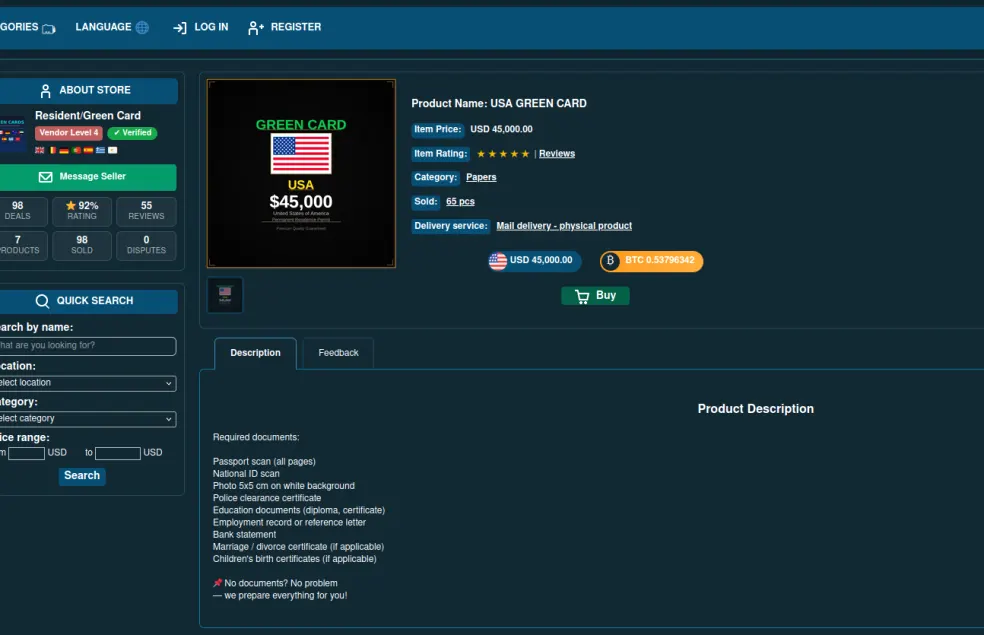 Scammers vs. Reality: The Dark Side of Buying Passports OnlineWe compare darknet passport and green-card listings with real black-market costs, from scam prices of $50 to document costs of $80,000.
 Dark Web Sites List 2025Explore our curated list of dark web sites for 2025, ensuring safe access to verified onion links and essential resources for privacy-consc…